Gandakent útsýni
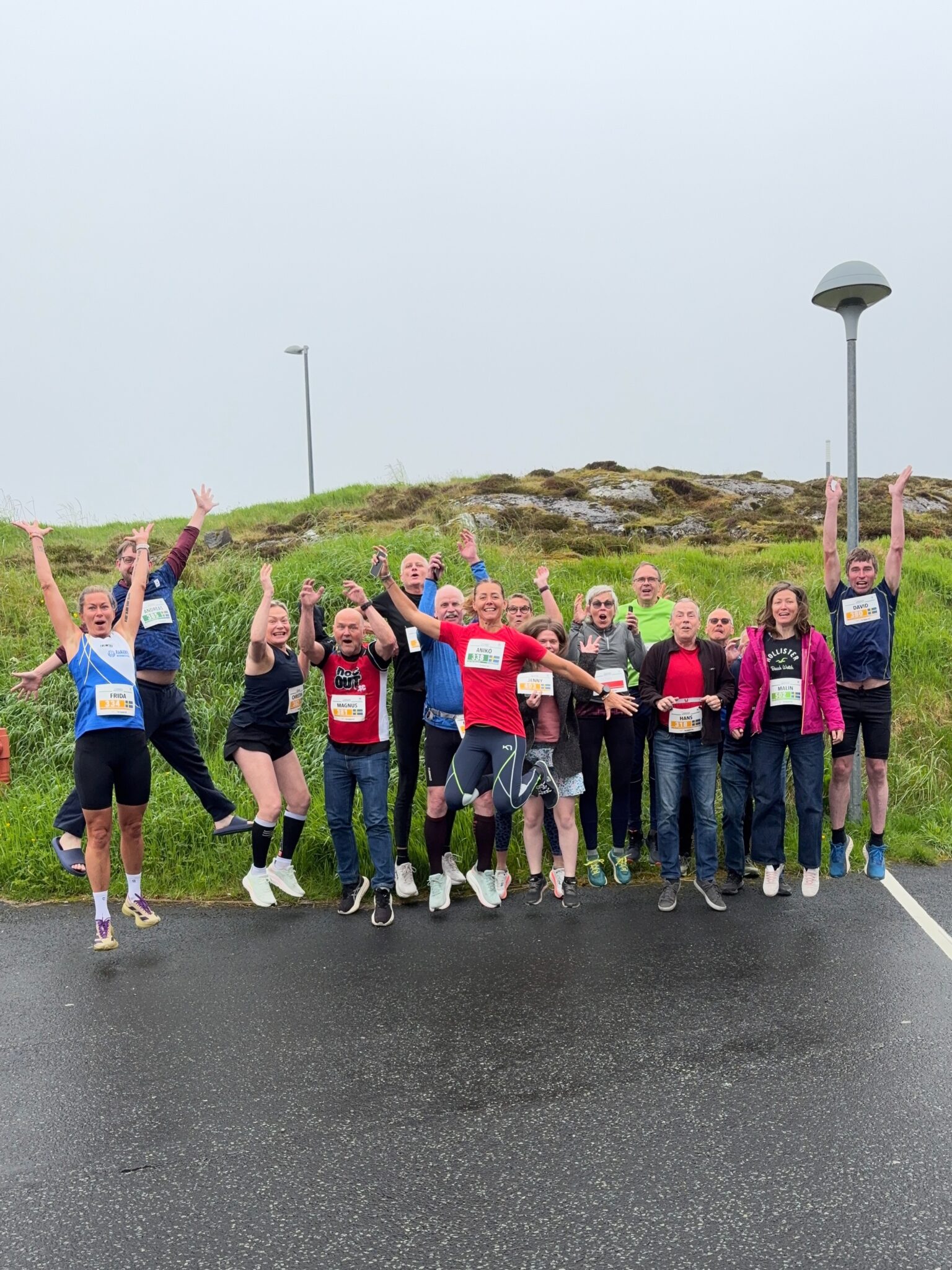
…On the way back, we were dropped off at the race bib pick-up point downtown. The main reason we had come here. The Tórshavn Marathon, which also offered shorter distances to choose from. One great thing about the city is that all local buses are always free of charge, and today they were even decorated with Swedish flags in honor of our National Day.
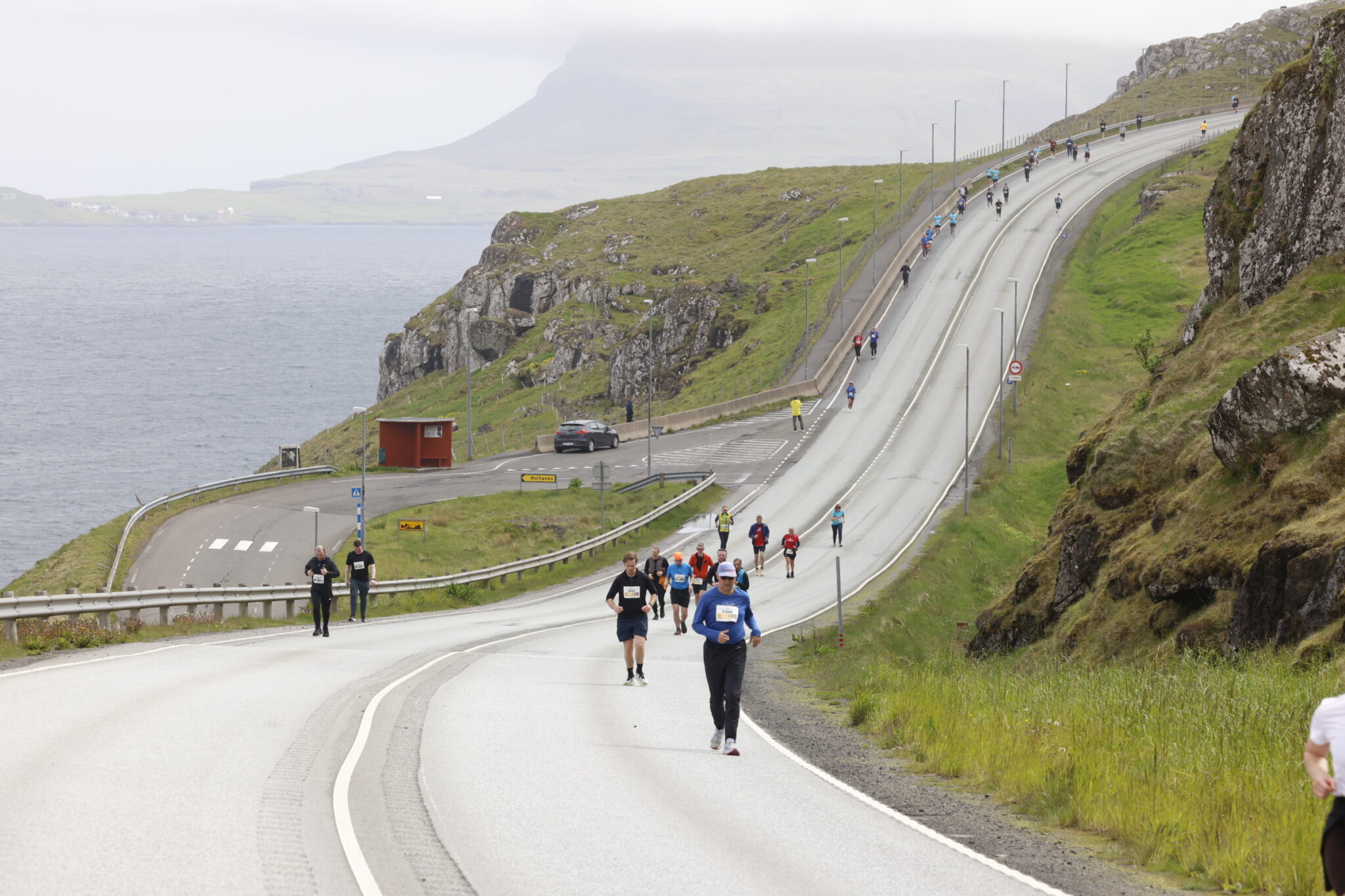
Sunday morning, race day, was different. There was no need to set an alarm. I could choose whatever I wanted from the hotel’s excellent breakfast buffet, however I wanted it. The race didn’t start until 1:00 p.m. Before that, we went down and sat at a café, soaking up the atmosphere around the event area. The temperature was going to be perfect, around 10°C, with no rain. There was nothing we could do about the wind. It was the same for everyone. A few minutes before the start, a young woman sang the Faroese national anthem. Then it was time. We started on a hill. That set the tone for the race. We were about to tackle a rolling roller coaster of climbs and descents, with a total elevation gain of around 560 meters. Time to get to work.
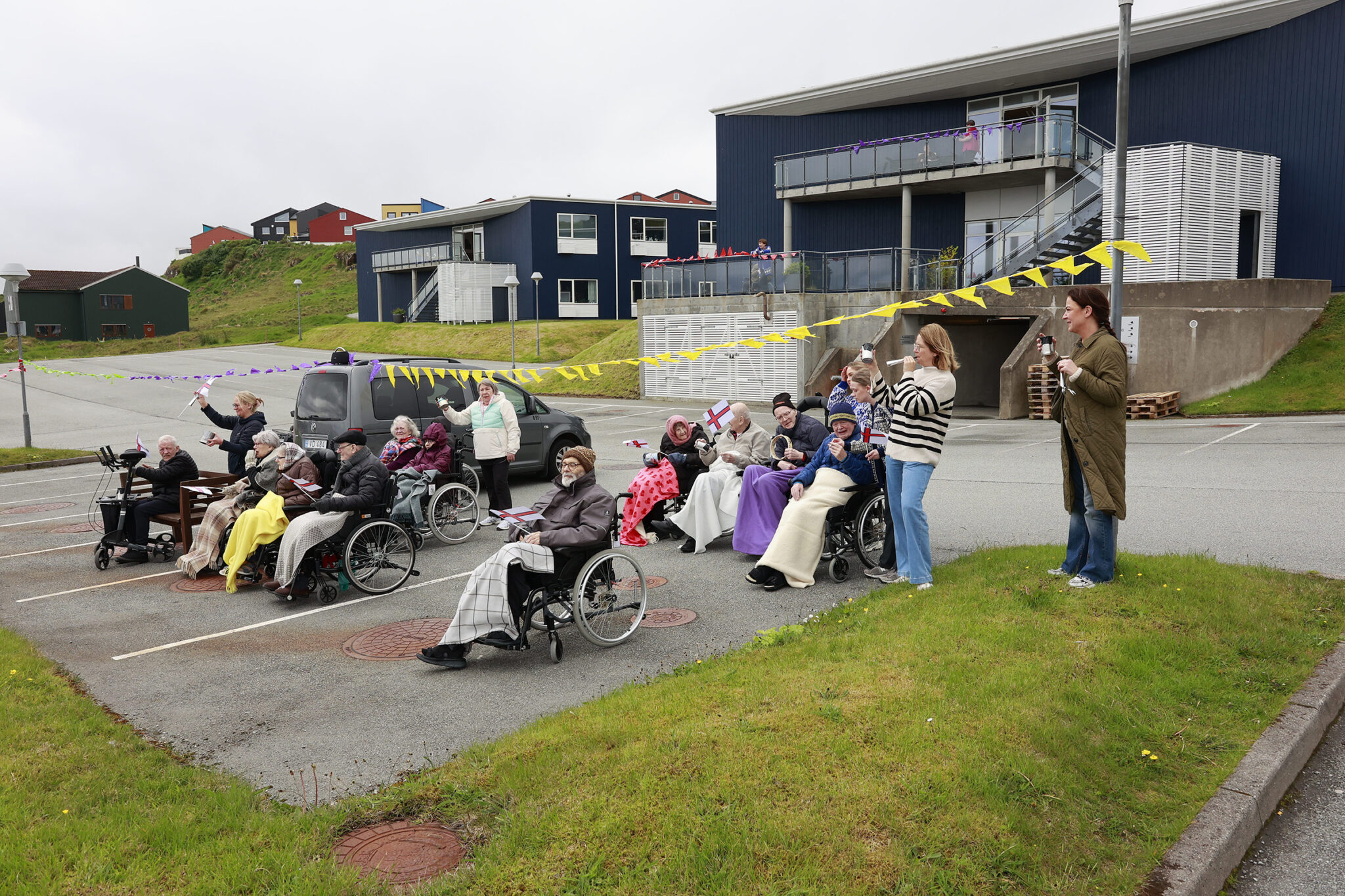
I took the lead from the start and thought that this race would be more about defending my position than chasing a fast time. The miles ticked by. Uphill and then downhill. First, an extra loop around town. The most heartwarming sight was the elderly residents at a care home, sitting with blankets over their knees and flags in their hands, happily cheering us on. Further out, down in a valley, a brass band was playing the song I Hammer, I Nail, I Build a Car. Our task was to run around a bay, out to the village of Kaldbak, and then back again. On the way out we had a tailwind, but as soon as we turned around, it felt as if the wind wanted to tear my bib off. It was like running into a wall. At the turnaround point, I got my first indication of my position. The runner in second place was only 500 meters behind me, with two more runners not far behind.
I thought to myself: this is going to be tough. The runners behind me were probably born on hills and had been running into headwinds on their way to school their entire lives. What did I have to counter that? But then again, hills are tough for them too. Maybe they get cramps as well. Which many runners on the course did. Even running downhill isn’t trivial when you already have so many kilometers in your legs. I decided not to look behind me at all. Just keep pushing. And that’s exactly what I did.
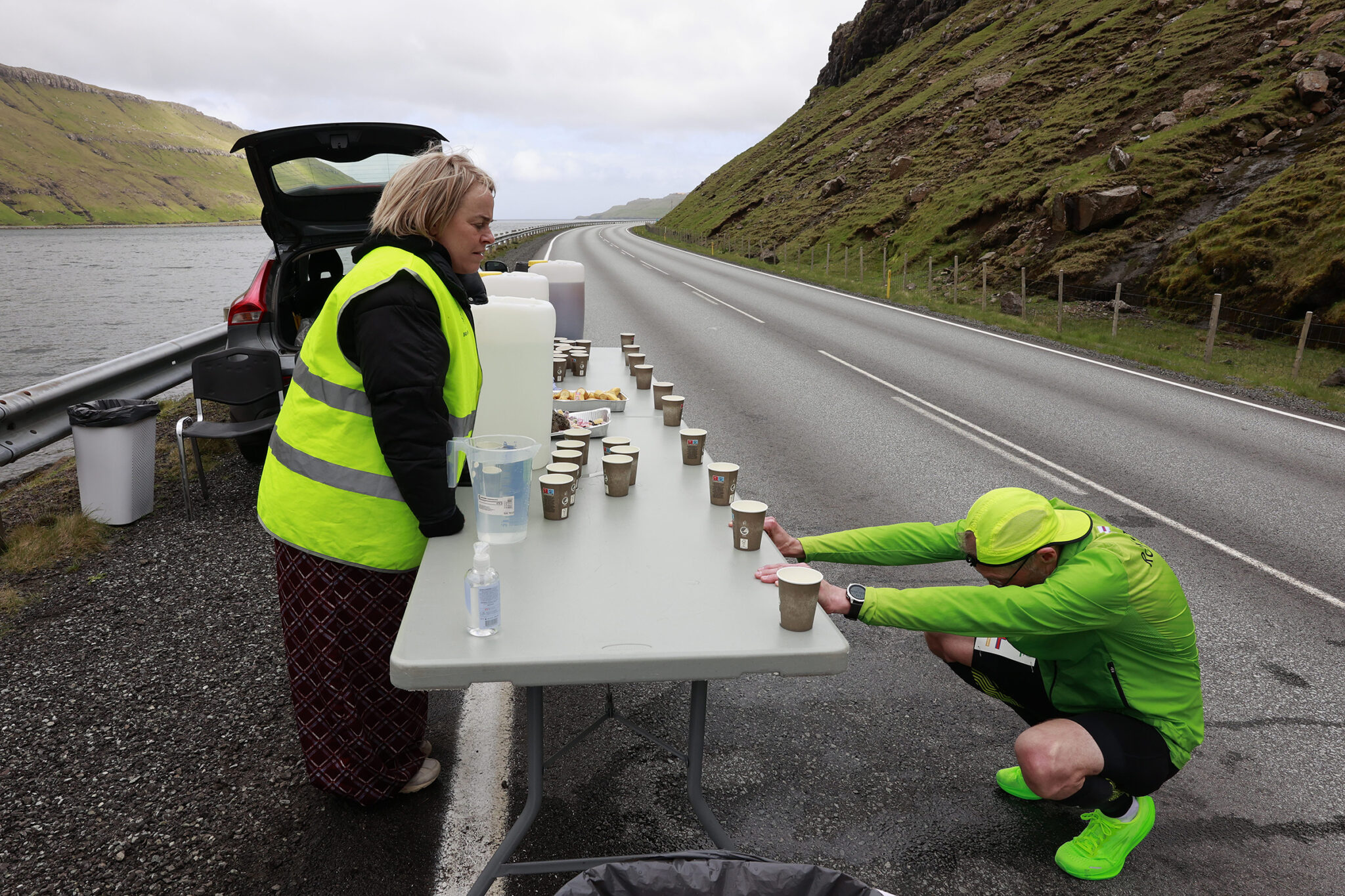
After the turnaround, we had a tailwind again, at least until we reached the bay. Then came 14 kilometers of headwind, combined with all the hills. The only race I’ve done that compares to this battle is Comrades in South Africa. Long climbs and descents on open roads. I managed to get my legs moving on the downhills. Took a few extra energy gels. Avoided any major cramps. I could feel that I was right on the limit. Others had already gone beyond it. They could no longer run and were limping forward. Ambulances drove back and forth along the course to provide support. But I forgot to mention the scenery. The mountains. The fjord. The waterfalls. The sheep. They all gave me energy. So did the participants in the somewhat unusual half-marathon walking category, who had been bused out to the turnaround point and were walking back to the finish. They cheered us on, including some of our friends. And there were all the marathon runners I could cheer for and who cheered for me in return. That’s one of the advantages of an out-and-back course.
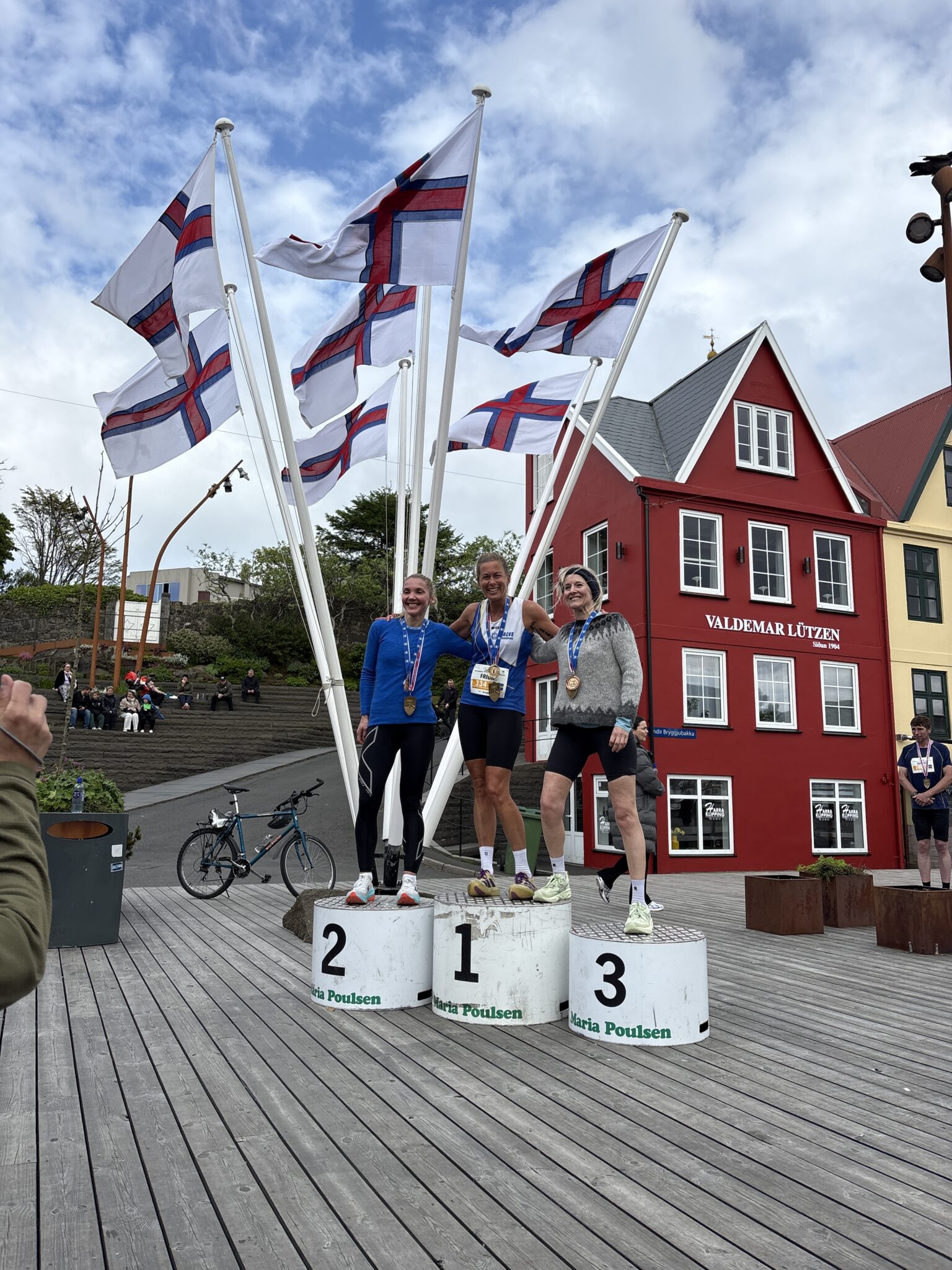
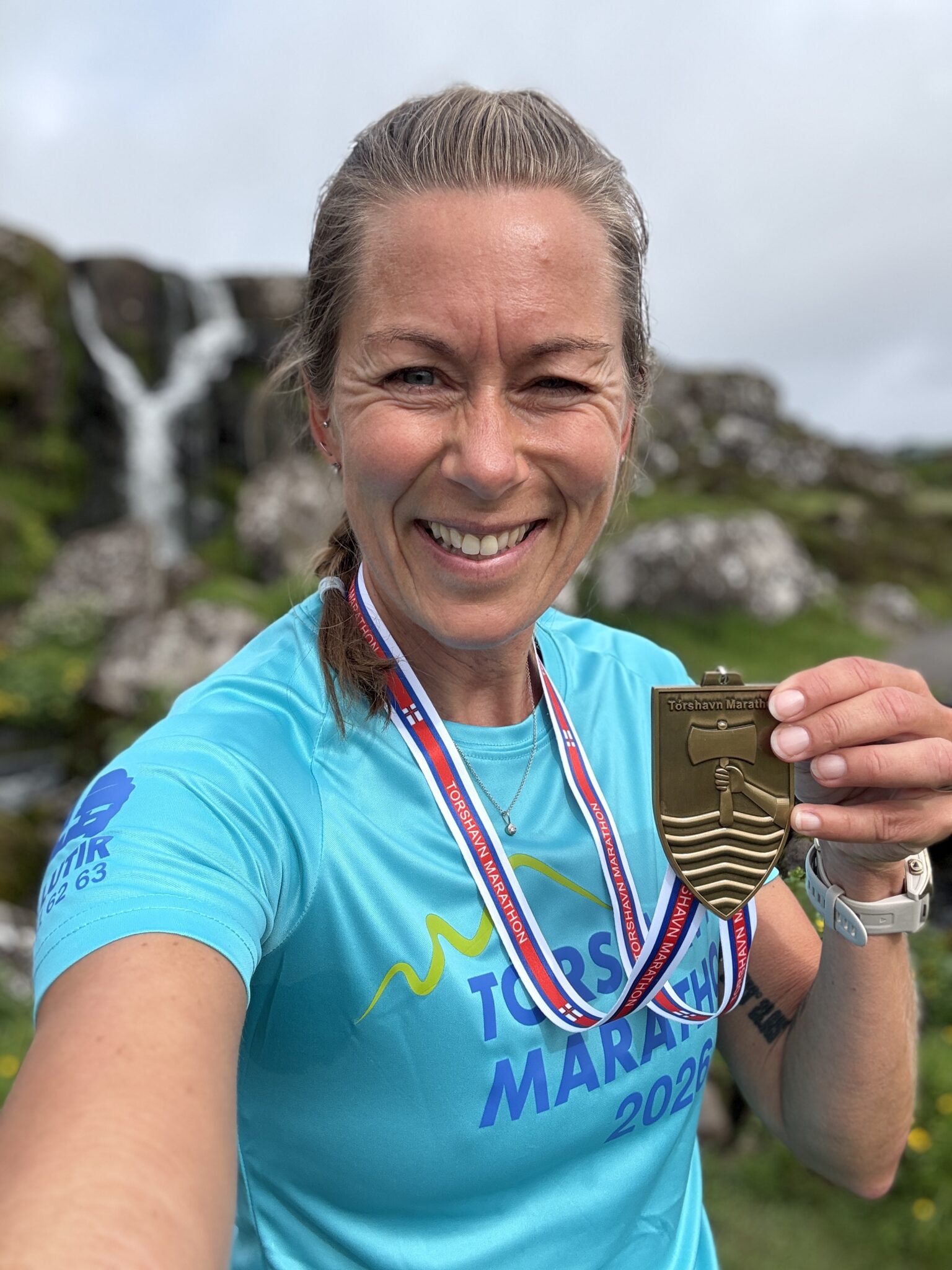
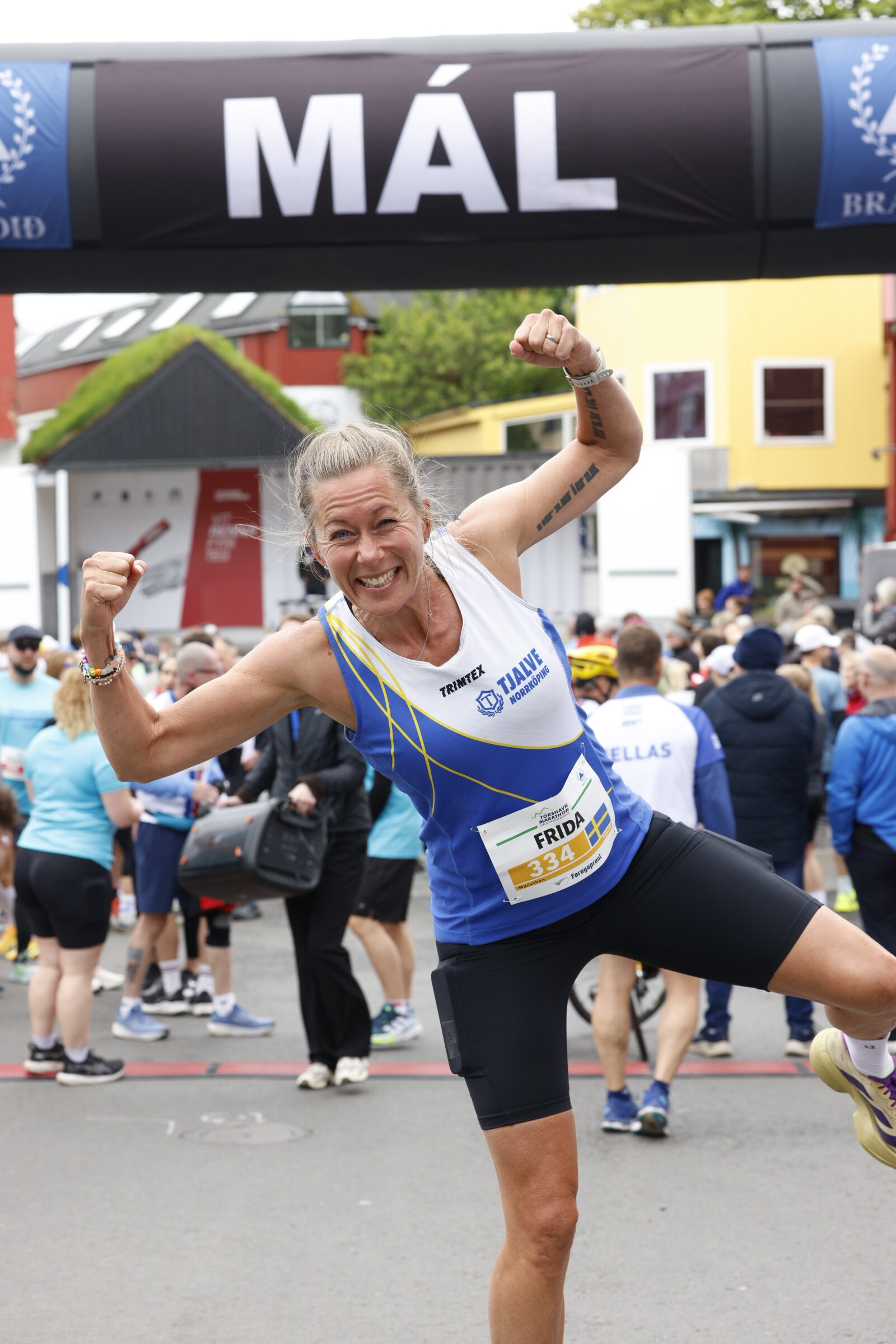
With three kilometers to go, I finally turned around. I didn’t see any woman behind me. I kept the pace up and stayed focused. More spectators were cheering now. We were back in town. The final kilometer was downhill. I hardly even noticed the bumps in the road. I kept fighting. And I won. In a time I was genuinely pleased with: 3:23:36. Only five minutes slower than the flat race in Riga three weeks earlier, a result I rate very highly. This course is no joke.
Hallur was the announcer. He was freezing. Sitting still in this climate is worse than moving. He had also realized that we had met before, during Ultravasan 2018. I had emerged from the forest after a bathroom break, and he recognized my racing singlet. He kept going and finished only a few minutes later.
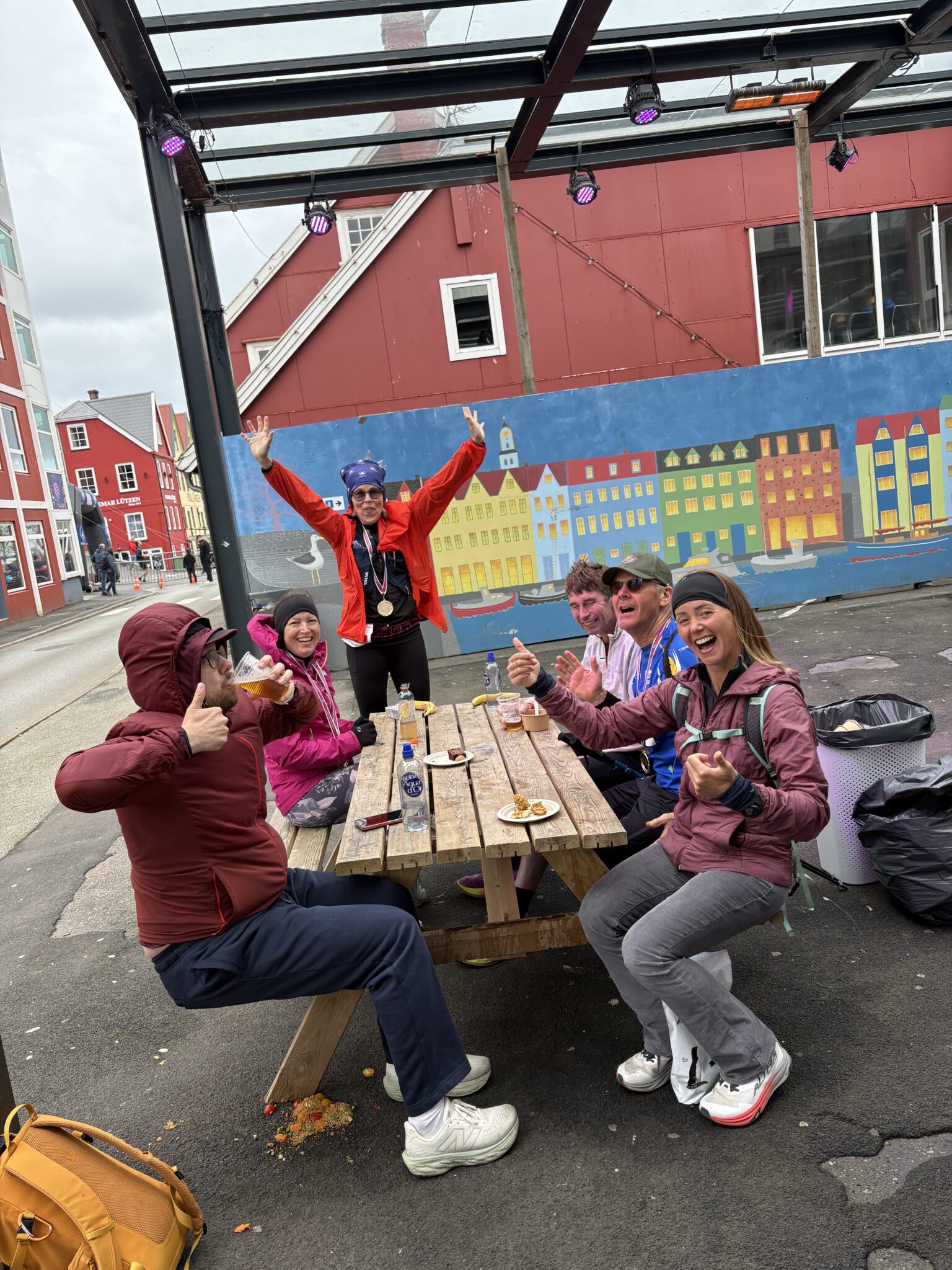
After the finish, it felt like a real celebration had just begun. All participants were treated to beer, food, and a buffet of cakes. Not some boring soup, but excellent salmon with bulgur. Everyone’s spirits were sky-high. We continued on to Mikkeller’s pub, where you could also get a beer by showing your medal. I had two medals. What a bonus. We stayed there and cheered in more finishers, even the very last runner, closely followed by an ambulance that, thankfully, he didn’t need. The atmosphere was fantastic. Wow, what an evening. Dinner at the hotel was wonderful too. Everyone had had a great, if challenging, experience. We had enjoyed amazing days. Cheers.
The next day, our airport transfer wasn’t scheduled until just before lunch, which meant there was time for an easy run. I did it in the city park, a small, planted, cozy woodland area. Then I headed farther north, where there was a beautiful waterfall only a kilometer from the hotel. Here, nature is always close by. What days. What experiences. I didn’t feel any soreness from the hills in my muscles.
But you know what? I felt it in one of my jaws. It must have been from all the smiling along the course and all the laughter throughout the weekend.
Thank you for a fantastic trip, everyone who wanted to come along. I’m so happy that I got to experience this place together with you.
The Faroe Islands. Hilly. Green. Magical. Remote. Magnificent. Friendly. Cozy. Full of weather. And, on top of that, a place where “Blandinavian” is spoken, which makes it feel even more like home.
You can see the full article in swedish here: https://www.loparaventyret.se/magiska-vyer-pa-faroarna/
Photos: Frida Sødermark and Tórshavn Marathon